Umāsvāti · Śvetāmbara recension

That which is —
studied line by line.

Ten chapters that compress the whole of Jain philosophy. This portal opens each one out: the sūtras, what they mean, the charts that make them visual, and tests you set yourself to prove you have understood.

Chapters

10

Sūtras

365

365 written up

Charts

39

सम्यग्दर्शनज्ञानचारित्राणि मोक्षमार्गः

samyagdarśanajñānacāritrāṇi mokṣamārgaḥ

Right faith, right knowledge and right conduct are the path to liberation.

Sūtra 1.1

Orientation

The seven tattvas at a glance

Two of them are substances. The remaining five describe how those substances entangle and then separate — which is also the order of the chapters ahead.

The seven tattvas

Two substances and the five stages between them (1.4).

Seven tattvas in sequenceJīvasoulAjīvanon-soulĀsravainfluxBandhabondageSaṃvarastoppageNirjarāsheddingMokṣafreedomsubstancesthe karmic processgoal

Inside a chapter

What every sūtra entry gives you

Four layers on one card — the original line, how to say it, what it says, and why the Bhāṣya reads it that way.

Sūtra 1.1Chapter 1 · Ratnatraya

सम्यग्दर्शनज्ञानचारित्राणि मोक्षमार्गः

samyagdarśanajñānacāritrāṇi mokṣamārgaḥ

Right faith, right knowledge and right conduct are the path to liberation.

The thesis statement of the whole scripture. 'Samyak' qualifies all three terms. The three are stated in the plural but the path in the singular, because they function as one cause; faith without knowledge is blind, knowledge without conduct is barren, conduct without faith is mere physical austerity.

Samyag-darśanaSamyag-jñānaSamyak-cāritraMokṣa
Mark-as-read per sūtra
Bookmark for revision
Private notes
Inline glossary chips
A Scholarly ⇄ Plain language switch sits at the top of every chapter, so the same material can be read twice at two very different depths.
Browse all ten chapters

Visual library

Charts that carry the doctrine

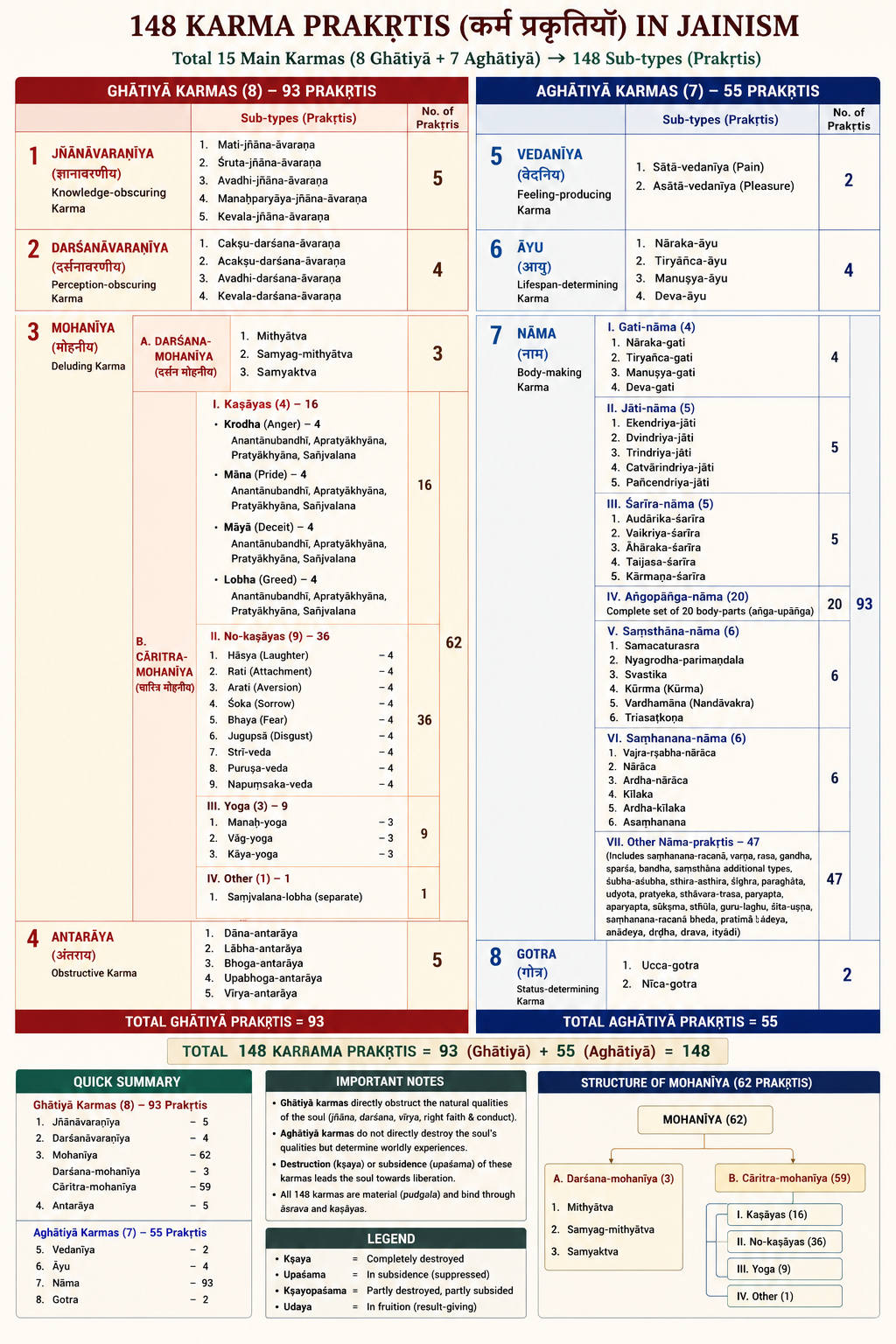
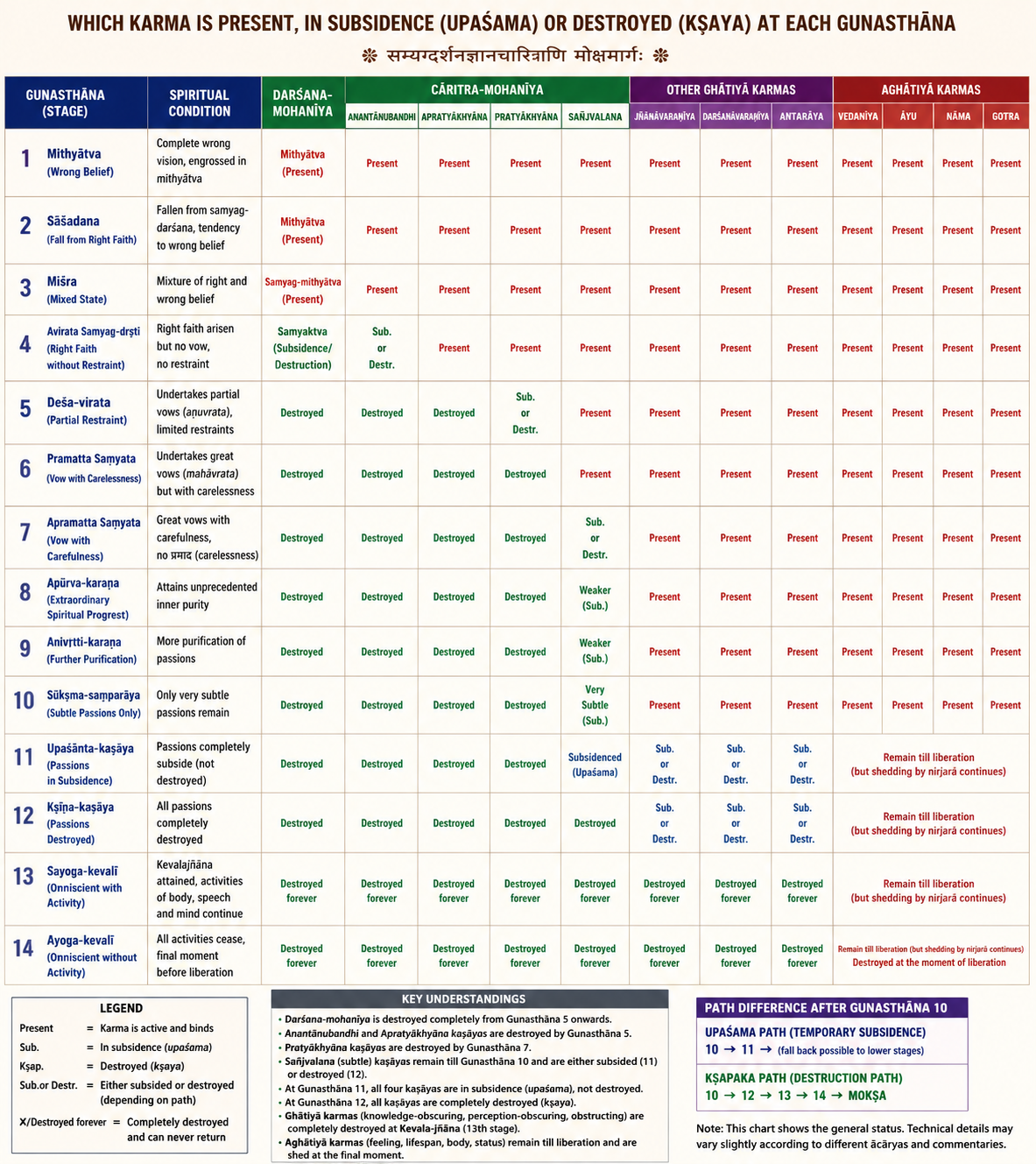
Vector diagrams built for the screen, plus large reference plates you can zoom into and download — karma prakṛtis, the fourteen guṇasthānas, the structure of loka, anekāntavāda.

A glossary you actually use

99 terms, each with Devanāgarī, a one-line gloss, a fuller treatment and the chapters it belongs to. Terms appear as chips inside the sūtras themselves.

Search the glossary

Tests on your terms

501 questions across 39 topics. Nothing is fixed — you set the exam before you sit it.

  • Scope: whole text or chosen chapters
  • Difficulty: easy, medium, hard
  • Marks per question and negative marking
  • Optional timer, then full answer review
Build a test

Ask Sūtra-mitra

A study bot bound to the Tattvārtha framework. It answers in the vocabulary of the text and points you at the sūtra to read next.

What is the difference between āsrava and bandha?

Āsrava is the inflow of karmic matter caused by the activity of body, speech and mind (6.1–6.2); bandha is that matter actually bonding with the soul because passion is present (8.2). Inflow without kaṣāya binds only momentarily.

Ask a question

Progress that stays yours

No login, no cloud. Everything lives in this browser and can be cleared in one click.

  • Coverage per chapter and overall
  • Daily study streak
  • Pace planner — set sūtras per day, see the finish date
  • Bookmarks and notes collected in one place
  • Test history with weak-topic detection
See the dashboard

A method

Four passes through every chapter

The portal is built around this loop; following it is what turns reading into retention.

  1. 01

    Orient yourself

    Start with the seven tattvas chart, then read the chapter summary and its learning objectives.

  2. 02

    Read the sūtras

    Work down the sūtra list. Mark each one read, bookmark the hard ones and leave yourself a note.

  3. 03

    Fix it visually

    Open the chapter's diagrams and reference plates — structure sticks far better than prose alone.

  4. 04

    Test and revise

    Build a test on just that chapter, review every explanation, then let the dashboard show weak topics.

The text

The ten chapters

Each card shows how much of its written-up sūtra set you have marked read.

Questions

Before you start

The Śvetāmbara recension of the Tattvārtha Sūtra with Umāsvāti's own Bhāṣya as the base commentary. Where the Digambara reading differs materially, the explanation says so.

परस्परोपग्रहो जीवानाम्

Begin at the first line.

Thirty minutes a day, one chapter a week — the pace planner will tell you when you finish.